Books

Ends and Odds: Book Reviews by Paul Vangelisti and Bill Mohr

Paul Vangelisti has recently launched a new outlet for book reviews, ENDS AND ODDS, which can be found on the MAGRA BOOKS website. You can find his commentary on several books, as well as a review by myself on Suzanne Lummis’s anthology POETRY GOES TO THE MOVIES, as the initial installments of this project. Vangelisti, who will turn 80 years old this coming September, is an indefatigable force in contemporary poetry, if one regards that term as meaning not just a temporal domain but the spatial interminglings that only translation can initiate. Beginning with INVISIBLE CITY, a magazine he co-edited with John McBride for the entire decade of the 1970s, Vangelisti has assiduously reminded the various scenes and movements in the United States of the social and literary contextualization that translators attain in serving as “authors.” What is translation, after all, but a conversation between two authors, neither subservient, and both overheard by others who patiently listen as a representative congregation for their own chance to speak out.

As for my review about “Poetry Goes to the Movies,” I would hope that readers would make the effort to place it within the context of my blog as a whole. Here, for instance, is a list of the most frequently read posts during the past ten days:

Suzanne Lummis in “The New Yorker”
“The Alphabet” by Ron Silliman (a review from ten years ago)
D.R. Wagner — Poet and Artist (1943-2023)
Wanting Animals on Her Side: a review of two books by Lynn McGee
The Invisible Strings of Returning Pleasure: Jim Moore reviews Holly Prado’s “Weather”
Quincy Jones (1933-2024): Composer, Arranger, Producer (and Advocate for SHAFT by Issac Hayes)
Paul Vangelisti Reviews “OUTLAW THEATRE”
“A Possibility: Music at the Santa Monica Civic Auditorium
The Garden City Horse Sculpture
The Sam Shepard Tribute at the Bootleg Theater
“He, Leo: The Life and Poetry of Lew Welch” by Ewan Clark
“Wicked Enchantment”: Wanda Coleman’s Selected Poems
“A Complete Unknown”: Jorge Luis Borges, Shakespeare, and Bob Dylan
Christopher Buckley’s “Cloud Memoir” — Thirty Years of Longer Poems
Jan Wesley (1962-2025): a poet whose luminous presence will linger
“I Wanna Be Loved By You: Poems on Marilyn Monroe” (including “Labials” by Bill Mohr)
Fred Voss (1952-2025): Worker Poet Extraordinaire
Either/Or Bookstore and “Barbarian Days”
Happy 50th Anniversary, Chatterton’s and Skylight Bookstores
Chatterton’s Bookstore: The Legendary Forerunner to Skylight Books
Papa Bach Bookstore – Los Angeles AND Jackson Hole, Wyoming
Kate Braverman (1949-2019): Poet and Novelist
Louis Montrose and the Spider-Man Tribute
Anacapa Review’s Third Issue
The Collected Poems of Eugene Ruggles
Reliquaries: The Sculpture of Ted Waltz
“The Moon and the Night and the Men” — John Berryman
Ed Massey: The Revivifying Artist as Intermingling Citizen (“Portraits of Hope”)
BACKLIST (Best poetry books 2000-2010)
“Spin, Spider, Spin” – Patty Zeitlin’s Songs for Children
The Collected Poems of Eugene Ruggles

Condescending commentary about the importance of verbs notwithstanding, Suzanne Lummis does deserve to be the next poet laureate of Los Angeles. Living less than three miles from the northern border of Orange County, however, I am very unlikely to have a vote in this matter. Ah! Did I not once write a post about how the selection of the poet laureate should be put to a vote by all the poets who have earned the muse’s enfranchisement?

Onward!

*

Here and There: Two New Books by Richard Milazzo & Kyle Harvey
REVIEW by Paul Vangelisti

https://www.magrabooks.com/ends-odds/2025/4/29/fxnnp6e1443iyxkycn3630otizdy2u

*

ON THE AVENUE: VINCENT KATZ’ DAFFODIL

https://www.magrabooks.com/ends-odds/2025/5/30/ie0hkgive9oycesgadyu1i8v69y9vi

*

OFF-SCREEN: A Double Feature of Poets and Movies
by Bill Mohr

https://www.magrabooks.com/ends-odds/2025/5/24/off-screen-a-double-feature-of-poets-and-movies

Books

“Of Being Numerous” — George Oppen’s Poem Read on “Harry’s Poetry Hour”

Harry Northup is a poet and actor whose contributions to cinema and poetry have made him an extraordinarily distinctive figure in American culture. The pleasure he takes as an advocate of those who enable poetry to flourish is particularly on view in his program, “Harry’s Poetry Hour,” which is broadcast out of MPTF (Motion Picture Television Fund) in Woodland Hills. His guests on over 250 episodes include poets from all over the nation and he does not restrict himself to presenting just the work of living poets.

Given that Harry’s own poetry has frequently involved long sequences of poems, it should come as no surprise that he recently invited several Los Angeles based poets to participate in a reading of George Oppen’s “Of Being Numerous,” which won the Pulitzer Prize over 50 years ago. Along with Paul Vangelisti and Phoebe MacAdams, I took part in reading a portion of Oppen’s long sequence, which is now available on YouTube. By chance, I was assigned particularly poignant sections concerning his recollections of what he observed as a solider in Europe during World War II.

One might be tempted to believe that having won a Pulitzer might suffice to make a poet canonical, and yet Paul Hoover omitted him from the Norton Anthology of Postmodern Poetry. (Fortunately, Oppen is included in Library of America’s “Poets of World War II.) Being pushed aside by an editor such as Hoover has consequences: too few young poets are familiar with his work. As such, I would recommend that anyone not familiar with “Of Being Numerous” get a copy of the poem to read in tandem with the broadcast the second time through. The individual numbers of the sections of the sequence are omitted by the readers in the MPTF presentation, and it will slightly reframe the poem to have the numbers mark off the increments as you experience the voicing of the poem.

Don’t wait, though, to hear the poem, simply because you don’t have time to get to a library.
Listen to it now, and be prepared for one of the most intricate and deeply felt explorations of the human condition by any poet whose work deserves a place on your shelves at home.

Books

The Burgeoning Canon of Contemporary Poetry (Part One)


Lynn McGee – Science Says Yes


William Archilla – “S Is For”


David Rigsbee — “”Watchman in the Knife Factory”


Juan Felipe Herrera — The Roots of a Thousand Embraces: dialogues”


Saeed Jones – “All the Music at the End of the World”


A.B. Spellman — “Between the Night and the Music”


Rae Armantrout – “Go Figure”


Jon Davis — “Fearless Now & Nameless”


Elaine Sexton – “Site Specific”


GLASS JAW


Ostriker — Holy and Broken Bliss

Books

The Burgeoning Canon of Contemporary Poetry (Part Two)


Lynn Lonidier – Fire-Rim Med Eden: Selected Poems (edited by Julie Enszer; Sinister Wisdom Books)


Judy Grahn — Criticism


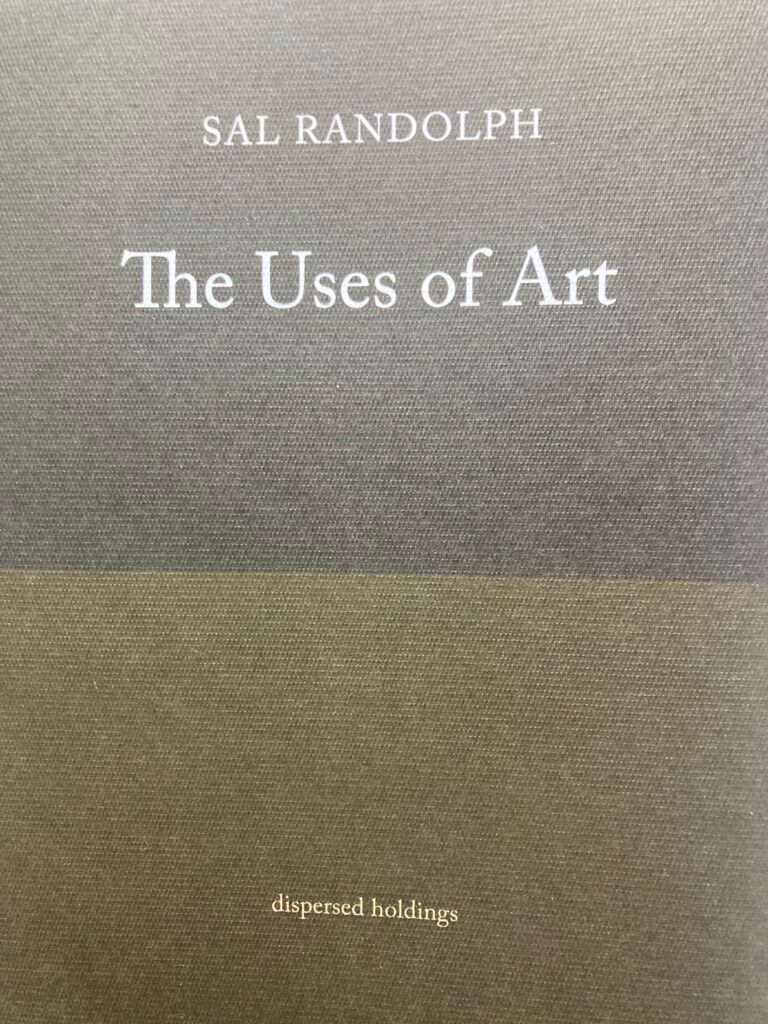
Sal Randolph –The Uses of Art


Etel Adnan – “Time” (Nightboat)


Brian Teare – Poem Bitten by a Man


Monica de la Torre – Pause the Document


Maw Shein Win — Invisible Gifts


Alberti – Concerning the Angels


Murray Mednick – Living Poetry (Slow Lightning Press)


Guy Zimmerman – Mammal One


Lawrence R. Smith – OTHER SACRED


Clough – Fire Roulette


Erik Morago – Feasting on Sky


Gary Glauber – Inside Outrage (Finalist for the Eric Hofer Award)


Woloch – Labor


Heather Bourbeau, “Monarch” (Cornerstone Books)


Elena Karina Byrne – No, Don’t


Susanna H. Case – 4 Rms w Vu

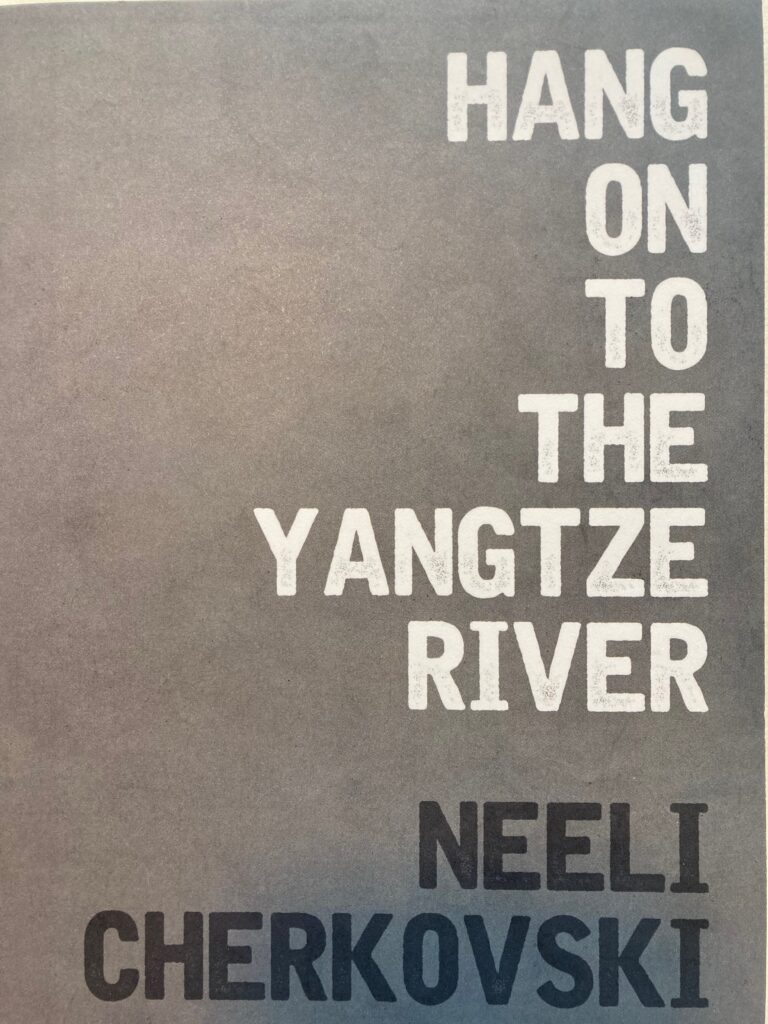
https://www.bigbridge.org/BB14/2010_Reviews/REV_2010_Cherkovski_review.htm


Jack Skelley — Fear of Kathy Acker

Books

FIRE ROULETTE: Poems by Jeanette Marie Clough

NOTE: Due to a tech glitch, my blog was down for 24 hours and when it was restored, this post had been deleted. Though I was not responsible for this development, I certainly regret that anyone looking for this review found themselves stymied. In addition, I want to thank Will Slattery for pointing out that two other posts had been deleted by the blog maintenance crew at GoDaddy during my blog’s suspended availability.


Clough – Fire Roulette

FIRE ROULETTE: Poems by Jeanette Marie Clough

Monday, April 21, 2025
One of the founding members of the Cahuenga Press Collective asked me to review this book, and since I was one of the original members of this enterprise, I think I should start with that full disclosure. Originally, in fact, the group wanted a book of my poems to be their first project, but I wasn’t particularly happy with my work at that time. In any case, I found myself more financially pinched than ever back then, and after helping out with the typesetting on a couple of books, I reluctantly parted ways with them. My main contribution to the group proved to be its name. We had gathered in a restaurant back at the earliest stages of the project and had yet to settle on a name. Suddenly, as possibilities that would evoke our home field were being suggested, I thought of the street the restaurant was located on: Cahuenga. “Cahuenga Press,” I blurted, and it immediately resonated with the group. “Two iambs,” said Jim Cushing, in seconding my motion. And so it came to pass.

It’s a tribute to Cahuenga Press that three of the original members are still publishing each other’s books, and have recently invited Jeanette Clough to join them. Her first collection with Cahuenga is deserving of all the praise awarded by it on the back cover. In poetry, unfortunately, it is a truth universally acknowledged that a memorable book of poems is unlikely to ever get much in the way of a review beyond its blurbs. Fortunately, the blurbs by Marsha de la O, Gail Wronsky, and Mariano Zaro are not just formulaic praise, but point to the aspects of Clough’s work that I would like to emphasize in this brief commentary.

In particular, when Wronsky mentions Clough being a highly skilled poet, and Zaro unabashedly claims that the book is a “masterclass in perception,” I wish that at least one of them had mentioned the word that perhaps they were afraid would scare off readers: meter. Clough shares with another very fine poet, Alex Umlas, the ability to write well both in meter and free verse, and such dexterity is rare. While I deeply admire a poet such as Tim Steele, whose work has championed the continuing viability of verse as a “meter-making argument,” I also appreciate the way that poets adjust their rhythms to the experiences being staged in the poem, and if it is in a kind of free verse that I regard as a radical form of prose poetry, so be it. “Rhythm is the total sound of a line’s movement” was Karl Shapiro’s summation, and Clough’s rhythms encapsulate the pulses of her astute perceptions
.
One problem for Clough is that the majority of individuals who send their work out for publication these days don’t have the slightest clue as how to hear that “total sound,” which is hardly limited to where the accented syllables fall in a line, but more crucially involves how vowels and consonants blend with and animate that beat. It has to be dismaying, if not demoralizing, to realize that one’s potential “readers” can’t read what you’re writing. A line is a band: drummer, bass guitar, rhythm guitar, lead guitar. Clough’s deft fingerpicking enables the variety of her lines to reinforce the oscillating tempo of perception and thereby lure the reader into the maze of meaning; or at least that is what is happening for the precious few for whom meter is second nature.

Take, for example, two lines in one of her seven “Imperfect Villanelles,” “Paranoia,”
“a blur of clearest ambiguity”; and “Imaginary, our proximity.” Each line’s skipping iambs accelerate the anguish’s irony. The ambiguity of “our” is not least in its solitary monosyllabic presence in the line. The longer lines in the poem, in contrast, unleash the desperation squirming at the heart of the poem with carefully aimed squeezes of syllabic energy, and each line hits its fraught bullseye.

While the majority of Clough’s work in FIRE ROULETTE is not written in meter, I have started with that aspect to drive home the point that her compositions involve a choice, and it’s hardly a limited ability to wield a metrical brush that leads to poems with looser applications of cadenced imagery. While her eye and ear are often astutely ambidextrous, a few poems fall slightly shy of their potential fulfillment. Her poem about a search party for a missing person, “Lost,” oscillates between “you” and “we,” and like many poems in which the first person plural shares center stage with another pronoun, the vagueness of the “we” proves more perplexing than it should be. Such is not the case in another poem, “Coloratura,” which delineates “the search party” as the seat mates, at a classical musical performance, of a floundering mother and a chagrined daughter; although the former is suffering from Alzheimer’s, it is she who is given the final say. After the daughter apologizes to the poem’s narrator for the mother’s behavior during the singing by claiming that she feels so embarrassed that she is “mortified,” the mother rebukes her daughter, “Mortified?…. Unmortify, unmortify. It is beautiful.” One is not expecting a person enduring the ravages of cognitive disintegration to proffer a variation on Rilke’s “You must change your life,” but Clough is alert enough as a poet not to pass up a gift from the muse.

While the title poem of Clough’s book has an eerie sense of premonition, given how large-scale fires wiped out entire neighborhoods in Los Angeles County at the start of the year, there are several other memorable poems that also concern the forces in nature that seek “a house to devour.” “Dog Days,” for instance, is the conjunction of August’s relentless heat in Los Angeles and the swarming termites for whom “Home is food until it is gone.” Humanity’s responsibility for setting some of these forces in motion is the theme of several fine poems, including “Hovering over Greenland” and “What the Planet May Look Like.” Though Clough could not possibly have known How Greenland would become for the Trump administration what the Ukraine is to Vladimir Putin, she has poignantly sketched not only the ecological crisis as it plays out in Greenland but also implicitly demarcated the scale of hubris the United States is risking in retrofitting manifest destiny to accommodate the devastation that our fossil fuel obsession has generated.

Since the authors who make up Cahuenga Press rotate their production schedule on an annual basis, it will be a while before we see another book from Clough, but I am already eagerly anticipating it. In many other books of poetry I have recently looked at, one would be lucky to find two poems of the quality of ones I have not yet mentioned: “Optic Nerve” and “Artesian Spring.” When one adds these poems to the ones already cited, my overall assessment is that it would be a challenge to categorize Clough’s collection as anything less than “superb.” You can write for a copy of the 29th book produced by Cahuenga Press at: Cahuenga Press, 1223 Grace Drive, Pasadena, CA 91105 ($20 plus 5.50 shipping and handling).

Books

Jeremy Ostriker: Extraordinary Astrophysicist (1937-2025)

Wednesday, April 9, 2025

It must have been around 35 years ago that I found myself standing in a grocery line in Century City, California, waiting to pay for the salad I had assembled for my dinner at my job as a typesetter at Radio & Records newspaper. I worked for weekly newspaper from 1985 to 1995, so the exact year is a blur, but I distinctly remember thumbing through an issue of Time magazine as I waited and seeing an article on astrophysics. Suddenly, my eye halted at the name of an astronomer quoted in the article: Jeremy Ostriker. I had never met him, but I had not only met his spouse, but had published one of her books of poetry. Of the two dozen books of poetry I published as the editor of Momentum Press, Alicia Ostriker’s THE MOTHER/CHILD PAPERS is easily one of the four books I am most proud of. It is, in fact, still in print! Beacon Press was the second publisher, and the University of Pittsburgh remains its third publisher.

I had met Alicia because of Jeremy’s work as an astrophysicist. He had been awarded a position at the Jet Propulsion Lab in Pasadena in the late 1970s, and Alicia took advantage of her residence in Los Angeles to visit the Beyond Baroque workshop in Venice. Jim Krusoe immediately liked her work and told her to submit some work to Momentum magazine. After Jerry and she returned to New Jersey, I continued our correspondence, during which she told me about struggling to finish a manuscript. “Finish it,” I said, “and I will publish it.” With that promise in mind, she set to work, and in 1980 I fulfilled that promise, bringing out THE MOTHER/CHILD PAPERS the same year that I published books by Len Roberts, who lived in Pennsylvania, and Bob Warden, a doctor who lived in Riverside, California.

I am thinking of Alicia right now because I just read the news that Jeremy has died. The last time I saw Alicia, at a conference in the Pacific Northwest, I learned that Jeremy was slowly growing frail, though he was still very active intellectually. The obituary in The New York Times mentions how he stayed engaged with his younger colleagues in astrophysics even as he was eventually confined to bed.

That Alicia and he had found each other when they were both young seems to me one of the miracles that interrupt the all too often tragic jumble of human life. “Love,” in all its confounding paradoxes, enabled them to flourish as individuals, or so it seemed to me from the distance in which I only saw the “sun” of the poet in the galaxy of their marriage and not the “sun” of the astrophysicist. My own life has been so much more turbulent in love’s oscillations that to see a couple like them was reassuring in that it reminded me that I was the anomaly in love’s wheel of constancy and mutability.

I send Alicia my most profound condolences.

https://www.nytimes.com/2025/04/07/science/space/jeremiah-ostriker-dead.html

Jeremiah Ostriker, Who Plumbed Dark Forces That Shape Universe, Dies at 87
There’s more to the universe than meets the eye, he found. His studies led astronomy to the dark side, changing our view of what’s out there.

Books

The Jerry Fialka Interview with Bill Mohr

Friday, April 4, 2025

Around eight years ago, I met Jerry Fialka in the back area of a coffeehouse that was on the north side of Pico Blvd. near where Santa Monica turns into West Los Angeles. He set up a tape recorder and we talked for about an hour and a half. I enjoyed the conversation more than I expected, given that such an interview almost. always require recite biographical facts about my personal background and experiences as an editor and publisher that are all too predictable in the familiar chronology of personal chronology when it’s shared with an interviewer. Recently, Jerry wrote me and asked for a follow-up interview, which would be conducted as a record Zoom conversation for his podcast. The spring break was coming up, and we set up a date. Two days ago, as the stock market braced itself for the worst case scenario (and then subsequently has found out that it’s much worse than the stock brokers anticipated), Jerry and I talked for another hour and a half or thereabouts.

Jerry just sent a link to that broadcast, which you can watch at your leisure.

I should mention that Jerry Fialka is the director of a reading group dedicated to reading Finnegans Wake out loud, one page a month, in a group setting. I’ve heard about this gathering for quite a few years, but always thought it was in person, which would make attending it a matter of driving from Long Beach to Venice. It takes place on line now, however, and I hope to join in starting on the first Tuesday of May. Mr. Fialka is one of the most intriguing cultural workers I have ever encountered, and I am grateful that we had a chance to share each other’s company.

You can find out more about him at:

https://en.wikipedia.org/wiki/Gerry_Fialka

Books

David Francis – The Great Inland Sea

I went to the AWP Conference for the bookfair only. Outside of a reading that featured Will Alexander and Harryette Mullen, I did not attend a single “panel” or talk.

I did pick up a considerable number of books I look forward to giving attention to in the next couple weeks. In the meantime, I want to mention an author whose book I only spotted after I had already exceeded my budget. On the final afternoon, Peggy Dobreer had asked me to read at their table some of Murray Mednick’s poems in his recently published collection, LIVING POETRY (from Slow Lightning Press). When I looked up from the page at one point, I could see a member of the small group that had paused in the passageway listening intently. Very intently. Afterwards, I asked his name, and only later did I realize that he was the author of the book I had taken a photograph of 15 minutes earlier. I didn’t want to forget in the midst of life’s flurry of instantaneous erasures about a title and book cover image that had caught my eye at Slow Lightning’s table.

In the not too distant future, then, this book, too.

Books

Trio of Poets at PATM: Mohr, Wallin-Soto; Shaley on 3/18

Books

David Garyan’s “Active Anthology” of California Poets

https://davidgaryan.wixsite.com/ladige/california-poets

“California Poets” — an online anthology of contemporary poets working on the West Coast

This coming summer will mark the fifth anniversary of the first installment of David Garyan’s on-line anthology of poets who have spent a good portion of their lives as poets residing in California. This is not to say that the poets he has selected so far amount, in the sequence presented, to a hierarchy, and the project is far from being finished if it is to be as comprehensive as it has the potential to be. Unlike print culture, this electronic template permits an editor to work up a “draft” of an anthology that could be then be rearranged into other combinations.

There are at least three dozen living poets residing in California who are not listed in the project so far, but it could be the case that some of them were approached and decided not to the part of it. Additionally, there are at least four dozen poets who were active in California between 1945 and 1975 who deserve recognition as predecessors whose work is absolutely central to the composition of any “canon” of West Coast poetry after World War II. Furthermore, there are another two dozen poets I could name who were prominent between 1975 and 1995 who have either died or withdrawn from any public role as a poet, but whose work complements both the predecessors just referred to as well as those in David Garyan’s multi-part anthology up to this point.

In the meantime, lest any poet at work in California feel neglected by what they might perceive as inexplicable delay in having their work featured in David Garyan’s project, here is some of the company you are keeping as you wait — patiently, I hope — for your turn to come round:

Jack Grapes; Juan Felipe Herrera; Kevin Opstedal; Doren Robbins; Aleida Rodriguez; Leslie Monsour; Joe Safdie; Murray Mednick; Victoria Chang; Jeannette Clough; Michael Davidson; Gary Gach; Art Beck; Glover Davis; James McMichael; Doug Messerli; Nancy Lynn Woo; Lee Herrick; Marilyn Chin; Stephen Yenser; Carol Muske-Dukes; David St. John; Brian Kim Stefans; Joan Jobe Smith; Fred Voss; Will Alexander; Charles Bukowski; Paul Naylor; Amy Gerstler; Michael Hannon; Harryette Mullen; Francisco Alarcon; Tony Wallin-Sato; Robin Coste Lewis.

If you are not in one of the eight sections below, you could very well deserve as much as anyone else included. On the other hand, review the list above and ask yourself if you are really a poet demonstrably superior to everyone in the list. I, for one, would never say that about myself; and I hope that anyone left out in the first eight installments has has enough self-perspective to make the same concession. It can be hard to let go of competitiveness; it’s mashed into our mental compulsion templates from a very early point. Please, though, be kind to yourself and to everyone else who is striving to help poetry flourish in these very difficult times.

*********

GO TO:

https://davidgaryan.wixsite.com/ladige/california-poets

California Poets
Parts 1 through 8

Part 1 – August 27th, 2020

Amy Uyematsu
Bart Edelman
Bill Mohr
Bruce Willard
Charles Harper Webb
D.A. Powell
David Garyan
Gail Wronsky
Glenna Luschei
Paul Vangelisti
Rae Armantrout
Suzanne Lummis

Part 2 – February 23rd, 2021

Carine Topal
Cecilia Woloch
Elena Karina Byrne
Glenna Luschei
Grant Hier
Kim Shuck
liz gonzalez
Lois P. Jones
Lynne Thompson
Maw Shein Win
Patty Seyburn
Rooja Mohassessy
Ron Koertge
Susan Rogers

Part 3 – June 25th, 2021

Alexis Rhone Fancher
Charles Jensen
Clint Margrave
Corrinne Clegg Hales
David L. Ulin
Eloise Klein Healy
Glenna Luschei
Henry Morro
Jonathan Yungkans
Laure-Anne Bosselaar
Laurel Ann Bogen
Lorene Zarou-Zouzounis
Lucille Lang Day
Marsha de la O
Michelle Bitting
Phil Taggart

Part 4 – December 29th, 2021

Alicia Elkort
Boris Dralyuk
Brenda Hillman
Cathie Sandstrom
Christopher Buckley
Clive Matson
Dana Gioia
Daniel Shapiro
devorah major
Donna Hilbert
Ellen Bass
Frank X. Gaspar
Gary Young
Glenna Luschei
Harry Northup
Holly Prado (In Memoriam)
K. Silem Mohammad
Kate Gale
Mariano Zaro
Mary Fitzpatrick
Michael C. Ford
Mike Sonksen
Neeli Cherkovski
Pam Ward
Phoebe MacAdams
Rusty Morrison
S.A. Griffin
Shelley Scott (In Memoriam)
Sholeh Wolpé
Shotsie Gorman
Tony Barnstone
Willis Barnstone

Part 5 – December 22nd, 2022

Arthur Sze
Brendan Constantine
Carol Moldaw
Charles Upton
Cole Swensen
Connie Post
David Garyan
Gary Soto
Glenna Luschei
Jacqueline Berger
James Cagney
James Cushing
Jeremy Radin
Jim Natal
John Brandi
Judith Pacht
Judy Juanita
Kim Dower
Kim Addonizio
Kosrof Chantikian
Luis J. Rodriguez
Marjorie R. Becker
Millicent Borges Accardi
Paul Lieber
Rick Lupert
Sarah Maclay
Scott Wannberg (In Memoriam)
Troy Jollimore
Valentina Gnup

Part 6 – October 25th, 2023

Alejandro Murguía
Candace Pearson
Carol V. Davis
Celeste Goyer
Clare Chu
Daniel Yaryan
David Garyan
Deena Metzger
Dig Wayne
Dion Jahmal
Doreen Stock
Doug Knott (In Memoriam)
Elizabeth Iannaci
Gail Newman
Guy Biederman
Holaday Mason
Jan Steckel
Jorge Argueta
Jose Hernandez Diaz
Kirsten Casey
Landon Smith
Linda Ravenswood
Maggie Paul
Matt Sedillo
Rafael Jesús González
Raffi Joe Wartanian
Regina O’Melveny
Renée Gregorio
Robt O’Sullivan Schleith
Stephen Kessler
Susan Cohen
Suzanne Bruce
Ted Burke
Terry Ehret
Timothy Steele
Tongo Eisen-Martin
Toni Mirosevich

Part 7 – July 1st, 2024

A.L. Nielsen
Allegra Silberstein
Bill Harding
Bob Stanley
Cathy Colman
Cathyann Fisher
Constant Williams
Dana Teen Lomax
David Lloyd
Deborah A. Meadows
Dee Allen.
Denise Low
Diane Funston
Dion O’Reilly
D’mani Thomas
Elizabeth Metzger
Eric Priestley (In Memoriam)
Gregory Orfalea
Hanna Pachman
Heather Bourbeau
Jack Foley
James Ragan
Jan Hanson
Kathy O’Fallon
Kim Noriega
Kristin Sanders
Laura Mullen
Lisa Rosenberg
Mimi Tempestt
Nelson Gary
Richard Modiano
Robert Lavett Smith
Roger Funston
Sandra Doller
Sandra Tanhauser
Séamus Isaac Fey
Stephen Meadows
Susan Hayden
Tim Xonnelly
Wendy-O Matik

Part 8 – January 8th, 2025

A.D. Winans
Albert Flynn DeSilver
Beverly Burch
Carolyn Miller
Clyde Always
D.L. Lang
Dane Cervine
Dave Seter
David Holper
Eliot Schain
Erik Noonan
Gail Entrekin
Jay Passer
Jessica Barksdale
Jonathan Hayes
Juan Delgado
K. Anne Rickertsen (In Memoriam)
LeeAnn Pickrell
Lory Bedikian
Maurya Simon
Maya Khosla
Megan Breiseth
Michael Tod Edgerton
Molly Fisk
Pat Hull
Patrick Cahill
Polly Geller
Robin H. Lysne
Sarah Rosenthal
Taylor Graham
Tenny Arlen (In Memoriam)
Thomas Piekarski
Tiff Dressen
Victoria Melekian
William Archila
William Taylor Jr.